
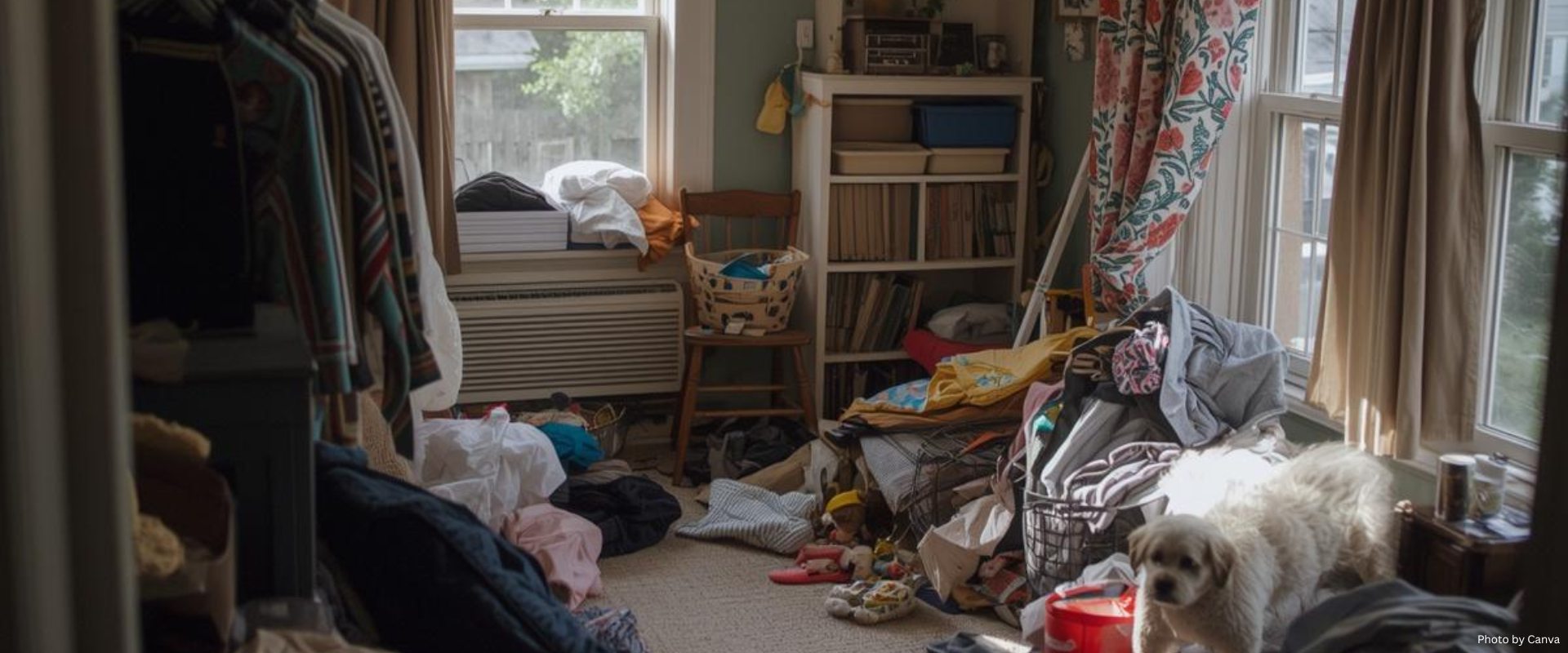
Our homes are more than just shelters; they are the external nervous systems of our families. Every pile of unsorted mail, every flickering fluorescent bulb, and every poorly placed piece of furniture sends a signal to the brain. For a parent, these signals can either whisper "you are safe" or scream "you are behind schedule." When we talk about family mental wellness, we often focus on communication and therapy, but we frequently overlook the physical stage where our family life unfolds.
By applying the principles of environmental psychology, we can transition from a home that demands constant management to one that actively facilitates restoration. Designing for calm is not about achieving a "minimalist" aesthetic for the sake of photos; it is about reducing the cognitive load on every family member.
The Science of Visual Noise and Cognitive Load
In the world of design, visual noise refers to an abundance of visual information that the brain must process. In a family home, this usually manifests as clutter. However, the stress of clutter is not just a matter of "messiness." According to a landmark study by the UCLA Center on Everyday Lives of Families (CELF), there is a direct correlation between high "object density" and elevated levels of cortisol (the stress hormone) in mothers.
When our eyes scan a room filled with unfinished tasks - laundry to be folded, toys to be put away, a broken cabinet door - the brain registers these as unsolved problems. This keeps the nervous system in a state of low-level "fight or flight." To combat this, the architecture of calm suggests creating "visual sanctuaries." These are specific areas of the home, such as a master bedroom or a reading nook, that are strictly kept free of household chores and digital devices. By giving the eyes a place to rest, we give the mind a place to reset.
Lighting: Aligning the Family’s Circadian Rhythm
One of the most powerful yet undervalued tools in the home is lighting. Most modern homes are lit with "cool" blue-toned LED lights that mimic midday sun. While this is great for productivity in an office, it is disastrous for a family trying to wind down at 7:00 PM. Blue light suppresses the production of melatonin, the hormone responsible for sleep, leading to "tired but wired" children and exhausted parents.
A home designed for low-stress living utilizes layered lighting. This means moving away from harsh overhead "big lights" in the evening and toward ambient, warm-toned lamps at eye level or lower. Research published in the Journal of Biological Rhythms confirms that exposure to dim, warm light in the evening helps align the circadian rhythm, improving both sleep quality and emotional regulation. When the house physically signals that the day is ending through a "warm glow," the family’s collective heart rate begins to drop.
Sensory Zoning: Managing Audio and Haptic Stress
We often think of architecture in terms of what we see, but for a child with a sensitive nervous system—or a parent overstimulated by a long day—what we hear and feel is just as important. High-stress homes often have "sonic spillover," where the sound of a television in the living room bleeds into the kitchen, which bleeds into the bedroom.
Sensory zoning is the practice of organizing a home based on activity levels. This might involve using thick rugs and heavy curtains to dampen echoes, which reduces the auditory "chaos" that triggers irritability. Furthermore, introducing haptic comfort—textures like soft wool, smooth wood, or weighted blankets—can stimulate the parasympathetic nervous system. This is particularly effective for children who struggle with emotional regulation. A soft, sensory-rich environment provides a "buffer" against the harshness of the outside world.
The Power of Biophilic Design in the Family Home
Humans have an innate biological need to connect with nature, a concept known as biophilia. Incorporating biophilic design into your home architecture is one of the most effective ways to lower blood pressure and improve mood. This goes beyond just buying a few houseplants; it involves maximizing natural light, using natural materials like stone and wood, and ensuring views of greenery.
A study in the International Journal of Environmental Research and Public Health found that even brief interactions with nature, including indoor plants, can reduce physiological stress. For a busy family, a "nature corner" or simply ensuring the curtains are wide open during the day can act as a natural antidepressant. When we bring elements of the outdoors in, we remind our nervous systems of a slower, more organic pace of life.
Household Flow and the "Landing Strip"
Stress often peaks during transitional moments, such as the morning rush to school or the evening return from work. A home that lacks a functional "landing strip" (an organized entryway) creates immediate friction. When shoes, keys, and backpacks don't have a designated home, the first five minutes of entering the house are spent in a state of frustrated searching.
Designing for calm means analyzing the "flow" of your family's movement. By creating a dedicated space for the "debris" of the outside world, you create a psychological boundary. Once the backpack is on its hook, the "student" role ends and the "family member" role begins. This physical ritual of shedding the day is essential for maintaining a low-stress environment.
Creating "Micro-Restorative" Spaces
You do not need a 5000-square-foot mansion to implement the architecture of calm. Even in small apartments, families can create micro-restorative spaces. This might be a single chair by a window, a small altar of meaningful objects, or a dedicated "quiet corner" with floor cushions and books.
The goal of these spaces is to provide a predictable retreat. In the chaos of parenting, knowing that there is one corner of the world that remains constant and peaceful is a powerful tool for emotional resilience. These spaces serve as a physical reminder that rest is a productive activity, not a luxury to be earned only after every chore is finished.
Your Home as a Partner in Parenting
Ultimately, the architecture of calm is about making your home your partner in parenting, rather than another entity you have to manage. When we design for the nervous system - prioritizing soft lighting, managed visual noise, and natural elements - we create an environment where co-regulation becomes easier. It is much easier to be a "warm and professional" parent when your physical surroundings aren't constantly poking you with a stick.
By intentionally shaping our spaces, we shape our family’s emotional health. A calm home doesn't just happen; it is built, one lightbulb and one cleared surface at a time.